

Winemaking 2.0: Optical grape sorting
Well this is pretty cool tech. Basically some German scientists have developed a machine/software that can identify the sugar content of grapes using the various optical properties related to sugar levels, and then sort them correctly for wine production.

Well this is pretty cool tech. Basically some German scientists have developed a machine/software that can identify the sugar content of grapes using the various optical properties related to sugar levels, and then sort them correctly for wine production. This could be a great way for Australian wineries to increase productivity, whilst still maintaining quality - when it has been proven and ready for production.
"After the scan, the system's software takes over. Based on its analysis of the colors of individual items on the belt, it controls air jets that blow bad grapes and detritus off the belt and sorts the remaining berries into grades for production of various qualities of wine."
Read the full article Optical Technique Sorts Grapes for Wine Quality
Swapping stainless for concrete?
If you have been following our blog, you should have seen the post we put up earlier about natural wine. As a follow up, a new trend (or maybe anti-trend, it's so hipster) has been to use porous concrete wine vats, instead of the traditional stainless steel.

If you have been following our blog, you should have seen the post we put up earlier about natural wine. As a follow up, a new trend (or maybe anti-trend, it's so hipster) has been to use porous concrete wine vats, instead of the traditional stainless steel.
"It's about coming back to the beginning,” [Bartier] says. “To revolve back to what is correct and traditional is to go back to the original vessel for winemaking, earthen pots buried in the earth. This is not technology at all. It’s anti-technology."
For what it's worth, being "traditional" doesn't necessarily equate to being good, and that's something worth considering. If the quality is kept under control, there's no reason why concrete wine vats can't produce excellent quality wine. Then there's hygiene...
"The giant tanks are not lined with anything on the inside. The rough, stony surface is constantly in contact with the aging wine, and that surface is home to a world of yeast and bacteria."
If you understand what is going on in your tanks, and what strains of bacteria are present, then this may be beneficial to your final product. We like to think that as wine is a publicly consumed drink and that equates to maintaining high standards of hygiene so as to reduce negative contamination.
What are your thoughts? Keen to try some natural wine?
**Update**
So the boffins in the lab have said that you just need to treat the cleaning of your concrete eggs like you would your oak barrels. So if you wanted to keep your concrete vats clean, apply your oak cleaning regime to them! If you don't have an Oak Regime, then why not chat with us and we can help you develop a sustainable cleaning program for your concrete or oak vessels.
EU wine shortage set to help Australian exports.
After adjusting for non-wine uses (such as production of vermouth), says Morgan Stanley, worldwide demand now exceeds supply by 300 million cases: the biggest shortfall in the past 40 years."

"Vineyards in France, Spain and Italy were plowed under, she (Alice Ferring) says, and housing sprouted where grapes had once grown. But since then, world demand for wine has increased. That, plus bad weather, has led to the present situation. After adjusting for non-wine uses (such as production of vermouth), says Morgan Stanley, worldwide demand now exceeds supply by 300 million cases: the biggest shortfall in the past 40 years."
This can only mean good things for Australia, especially considering the recent (2008) renewal of the EU-Australia wine agreement, which has helped reduce restrictions and increase acceptance for Australian agricultural practices.
Advancing the frontline against Brett
In the fight against Brett, winemakers need to have access to the best technology possible. For many years now, the Australian Wine Research Institute (AWRI) has been developing cutting edge technology, and engaging in 'on the ground' communications work to bring this technology to Australian producers.

In the fight against Brett, winemakers need to have access to the best technology possible. For many years now, the Australian Wine Research Institute (AWRI) has been developing cutting edge technology, and engaging in 'on the ground' communications work to bring this technology to Australian producers.
Recent advances in genome sequencing techniques has allowed the AWRI to take a closer look at Brett and to determine what causes it's sulphur resistance, and what can be done about it in a targeted manner. Check out the article"Advancing the frontline against Brett" - it's well worth a read.
For our two cents, at this current stage, your best bet to help control Brett growth is to have a thorough hygiene regime in place. This will always be the case, not only for the fight against Brett, but also against all unwanted microbes in your wine.
The scourge of Brettanomyces and the need for sanitising.
Over the past few years Brettanomyces or Dekkera (Brett for short) have been spreading rapidly throughout wineries in Australia causing much unwanted wine taint, specifically in the form of volatile phenols or ‘sweaty leather’. Brett yeasts are a natural component of the winemaking process, which makes it almost impossible to eliminate completely and unsurprisingly they find themselves in winery air, on cellar walls, drains, pumps, transfer lines and other pieces of equipment.

Over the past few years Brettanomyces or Dekkera (Brett for short) have been spreading rapidly throughout wineries in Australia causing much unwanted wine taint, specifically in the form of volatile phenols or ‘sweaty leather’. Brett yeasts are a natural component of the winemaking process, which makes it almost impossible to eliminate completely and unsurprisingly they find themselves in winery air, on cellar walls, drains, pumps, transfer lines and other pieces of equipment. The two most important stages for Brett contamination in winemaking occur during malolatic fermentation and ageing in used barrels. Brett’s slow growing characteristics are best suited to the conditions created after alcoholic fermentation is completed and where the surfaces are not cleaned and sanitised correctly, leaving residual sugars and allowing Brett to proliferate.
The real issue here is how to combat Brett proliferation in your winery. A report in the South African Journal of Enology and Viticulture outline the five key areas for the spread of Brett, which are;
- Recent trends in some winemaking styles - such as wines with higher pH values and residual sugar;
- Trends in winemaking practices - decreased use of filtration and SO2;
- General poor cellar hygiene along with improper cleaning and sanitisation of barrels - a critical source of Brettcontamination of wine;
- The spread of Brett between wineries and regions due to the use of contaminated barrels which are traded in the second hand barrel market; and
- Importation of Brett contaminated wine from other affected wineries.
The first two points are winemaking practices, and as we are hygiene specialists not winemakers, we’ll leave those decisions up to the experts and enjoy the end result! The last two points are about good winery management. That is making sure you know what you are putting into your cellar and where you are getting your produce from, that’s just good practice. Knowing when Brett infected products or wine is in your winery will enable to you to take steps to manage their spread, and limit any damage that may occur. There are many different ways to manage Brett in your wines once they are there, some of which are outlined in this Wine Monthly article, but we believe that prevention is better than a cure and that brings us to point 3 - poor hygiene. As dull as it may sound, it’s serious business and it can cost you dearly if you don’t take it seriously.
Research into Brett has shown that it is able to form significant biofilms on what appear to be clean surfaces, and these biofilms are a major source of Brett propagation throughout a winery. The formation and adherence of Brett has been shown to increase with increasing pH of wine, and sulphur dioxide is known to slow down the rate of Brett growth in solution (which is why it is so commonly used in modern winemaking). A good summary of biofilms and effect of cleaning and sanitising can be found here. However these are merely control solutions after infestation, rather than a method to eliminate harmful microbes from your wines. Another source of Brett contamination is in oak barrels. A 2013 study by Guzzon, Nardin, Micheletti, Nicolini and Larcher outlined the use of ozone as ‘a highly effective sanitising agent without interfering with the profile of the phenolic substances extracted from oak’.
When we talk about hygiene, what we are really talking about is your hygiene procedure, which includes all aspects from cleaning, sanitation and scheduling. It’s important to have a thorough hygiene procedure in your winery to limit the spread of all microorganisms, not just Brett. Cleaning is a very important part of any winemaking process, however a clean surface is deceptive as it can still harbour microorganisms such as Brett that can taint your wine if left unattended. This is where sanitisation is most important and is something that needs to be addressed in a serious and systematic way so that you can ensure the quality of your wine. Think of sanitation like insurance for your wine. If you do it properly, then you can be safe knowing that there won’t be any hidden surprises along the way to achieving your final product. Just remember, sanitation alone will not cure a Brett infestation, as sanitation will not destroy the biofilms that Brettutilises to grow, but using the right cleaning agent, followed by correct sanitation will provide you with the best possible counter-attack to Brett infestations. The last and probably most important step is to develop a hygiene procedure within your winery, and then stick to it. If you take hygiene seriously, then you shouldn’t have to spend much time worrying about the scourge of Brett in your winery, which means you can spend more time making great wine!
References
Oelofse, A, Pretorius, IS & du Toit, M 2008, ‘Significance of Brettanomyces and Dekkera during Winemaking: A Synoptic Review’, South African Journal of Enology and Viticulture, vol. 29, no. 2, pp. 128-144
Barata, A, Laureano, P, D’Antuono, ID, Martorell, P, Stender, H, Malfeito-Ferreira, M, Querol, A & Loureiro, V 2013 ‘Enumeration and Identification of 4-Ethylphenol Producing Yeasts Recovered from the Wood of Wine Ageing Barriques after Different Sanitation Treatments’, Journal of Food Research, vol. 2, no. 1, pp. 140-149
Patterson, T 2012, There’s No Subsitute for SO2 (Yet), Wines and Vines, http://www.winesandvines.com/template.cfm?section=columns_article&content=103719&columns_id=24
Joseph, L, Kumar, G, Su, E & Bisson, L 2007 ‘Adhesion and Biofilm Production by Wine Isolates of Brettanomycesbruxellensis’, American Journal of Enology and Viticulture, September 2007, vol. 58, no. 3, pp. 373-378
Guzzon, R, Nardin, T, Micheletti, O, Nicolini, G, & Larcher, R 2013 ‘Antimicrobial activity of ozone. Effectiveness against the main wine spoilage microorganisms and evaluation of impact on simple phenols in wine’, Australian Journal of Grape and Wine Research, June 2013, vol. 19, no. 2, pp. 180-188
Biofilms - the reason you should care about protein stains.
This summary of the paper 'Adhesion and biofilm production by wine isolates of Brettanomyces bruxellensis' from Viticulture and Enology from UC Davis outlines some interesting points about the formation of biofilms and how they can lead to Brettanomyces infestations.

This summary of the paper 'Adhesion and biofilm production by wine isolates of Brettanomyces bruxellensis' from Viticulture and Enology from UC Davis outlines some interesting points about the formation of biofilms and how they can lead to Brettanomyces infestations.
The main points to take away from the summary is that in order to suitably control for an outbreak of Brett, it is important to have a reliable cleaning regime in place. This is especially so in relation to protein stains and biofilms, as they are a key breeding ground for Brett isolates. If your cleaning agent doesn't have the requisite power to bust through these heavy stains and biofilms, then you are setting your winery up for a potential disaster.
Another key point, is that simply sanitising without thoroughly cleaning is not sufficient to break down biofilm and thus avert a potential Brett infestation.
One for you, and one for your cat
"Today, in Japan, bottled wine created especially for cats goes on sale. This is not a joke. Apparently."

That's not a typo in the heading.
"Today, in Japan, bottled wine created especially for cats goes on sale. This is not a joke. Apparently."
We don't really need to elaborate on this concept - but check out the full article here!
'Natural' vs 'Conventional' wine. Which is best?
So-called "natural wines" may be finding favour in Australian bars and restaurants, but the term rankles many in the industry.

So-called "natural wines" may be finding favour in Australian bars and restaurants, but the term rankles many in the industry.
"If it gets people interested in wine who might not otherwise be interested, you cannot argue against that being a good thing," said Australia's most prominent wine writer James Halliday.
Read the whole article here. If you're not fond of reading, check out the video at the bottom of the linked article.
For us, natural wine makers still need to concentrate of their cellar cleanliness, maybe even especially more so, because traditional microbe control mechanisms may not be available to them as with conventional methods.
Australia set for a 50% wine import boost in China
“As China’s middle class continues to grow, so too should its demand for more premium products, including quality vintages that can’t be produced en masse locally,”

It's always nice to hear good news throughout the clamour of poor forecasts for the Australian wine industry, and how much better could it get?
“As China’s middle class continues to grow, so too should its demand for more premium products, including quality vintages that can’t be produced en masse locally,”
For us at AIRD, a focus on premium wine should also signal a focus on getting your sanitation practices beefed up and under control, it's basically just insurance for your wine. AIRD offers a bespoke and premium solution to wine hygiene, and our expertise should be able to help you with your sanitation issues.
I'll have a glass of Grange thanks. Yep, just a glass.
One of the coolest ideas going around is the Corvain, and it aims to change the way restaurants serve and we drink specialty wine. It's basically a contraption that allows you to extract a small amount of wine without taking out the cork, meaning wines that up until now had to be served only by the bottle, can now be offered by the glass. Can't wait to try them all now!

One of the coolest ideas going around is the Corvain, and it aims to change the way restaurants serve and we drink specialty wine. It's basically a contraption that allows you to extract a small amount of wine without taking out the cork, meaning wines that up until now had to be served only by the bottle, can now be offered by the glass. Can't wait to try them all now!
Your bottle of fine corked wine have bouquet of a wet dog? Here's why
This is an interesting article from NBC, which basically states that corked wine doesn't give off a bad smell, but rather the chemical inhibits your own sense of smell. Trippy stuff!

This is an interesting article from NBC, which basically states that corked wine doesn't give off a bad smell, but rather the chemical inhibits your own sense of smell. Trippy stuff!
"The main chemical responsible for corked wine's off-putting smell is a chemical called 2,4,6-trichloroanisole (TCA). TCA infiltrates wine when a fungus that normally infects cork comes into contact with bleaches or other chlorine products used in wineries for sanitation."
"After the cause of the smell was identified in the 1990s, many wineries removed chlorine from their cleaning regimen."

It’s time we stopped using commodity caustic in Australia
Commodity caustic soda (Sodium Hydroxide) is used regularly in wineries globally, however we at AIRD believe that commodity caustic is wasting money, ineffective and dangerous for use in your winery. Find out why.

Yes it’s cheap and it’s ubiquitous, but it may be doing damage to your wine and equipment, but let’s first look at the pros. Caustic is very good at quickly removing heavy deposits of wine solids with tartar whilst its pH is in the range 10-14 and used with potable water in ambient temperature range of 20-40°C. These few benefits are the main reasons why it has become so widely used throughout the global wine industry.
As caustic is a sodium product, it is potentially environmentally degrading (high sodium effluent can cause sodic soils), corrosive to most contact surfaces, creates high HR risk in use (burns to skin and eyes) and is not as an effective cleaning agent as you might think. In addition to that, think of all of the extra paperwork and cartage cost required in transporting, on-site handling and storage; on site HR supervision; as well as the safety equipment required and maintenance for its use.
The pH differential between caustic and wine is 14 to 3.5 respectively, and the salt, whilst effective in decolourising and dissolving the organic soil, denatures and chars it at the same time (evidenced by red wine colour converting to a charcoal). At the same time, as a common salt derivative it increases surface tension which reduces likelihood of the removal of the protein. When cleaning with caustic, often biofilm/protein char presents on surfaces after the process which requires large amounts of hot water and a mechanical action (high pressure pump spray) with task specific cleaning agents or often scrubbing in smaller tanks with only water (or a safe-to-use chemical) to simply to remove this film.
With all of this there is still no guarantee that you have eliminated layered protein char-stain from your stainless equipment, most particularly in large stainless steel tanks. It has become common practice to rinse with a low dose aqueous citric acid after the caustic cleaning process to neutralize any residual sodium salt and reduce Ca/Mg scale. This process will not remove the charred biofilm, (as you may well have already experience), and this biofilm is the perfect breeding ground for Brettanomyces to flourish within your tanks.
In an attempt to fix this ‘filming’ problem where there are heavy stains, rather than re-cleaning equipment with more reliable cleaning products, it has become common practice in some wineries to increase the concentration of the caustic solution and increase ‘cleaning in place’ (CIP) circulation time. What you need to understand and what we are trying to stress is, simply putting more caustic in and leaving it there for longer won’t remove the bio-film but may in-fact, exacerbate it. If you increase the concentration of caustic in solution, you run the risk of premature ageing of your assets (e.g. pitting in the stainless surfaces of your tanks), and you increase the danger for your employees having to mix a dangerous good in higher proportions, which can cause severe burns if it comes in contact with skin or eyes. Caustic is strongly reactive with aluminium and can cause degradation of glass surfaces, so not only do you have to be careful about where and how you store it, but also how you use it.
So let’s look at some more chemistry. When a quantity of caustic soda granules (pearl) comes into contact with a small volume of water it creates a strong exothermic reaction which can be dangerous to users as it can cause high pH vapour, which then comes into contact with the skin, or worse, the eyes. If you are using hot water in your cleaning process (which we would strongly recommend), a much more volatile and dangerous ‘spitting’ reaction occurs upon contact of caustic with water. The highly alkali pH of caustic solution can lead to blindness if it comes into contact with your eyes. So the real question is, why risk this happening to your trained cellar staff, or even to yourself if you are the all-in-one person in a small/micro winery?
Yes, caustic is cheap. However, when a staff member is injured due to using a dangerous good, workplace injury claims aren’t cheap; and wasting wine isn’t cheap when your wine tanks and lines aren’t really satisfactorily and they become infected with unwanted microbes. It’s simply not worth it. It’s time to use your grey matter, look across the spectrum and compare the greater negatives with the few positives for commodity caustic soda. The alternatives now available are far more effective at cleaning your surfaces, safer for you and your wine and require less effort to get the job done correctly the first time - but that’s a conversation for another time.
If you have any questions about caustic alternatives, then get in touch, because it is time to stop using caustic, it’s time to start cleaning smarter, safer and cleaner.
Caustic ineffective against mature Biofilms
A recent article in Food Quality News demonstrated that mature salmonella biofilms were not able to be removed by sodium hypochlorite, sodium hydroxide and benzalkonium.

A recent article in Food Quality News demonstrated that mature salmonella biofilms were not able to be removed by sodium hypochlorite, sodium hydroxide and benzalkonium.
This has a direct implication on wine production. Biofilms caused by sodium hydroxide (or chemical filming caused by sodium metasilicate) can leave an environment where yeast, bacteria and microbes can persist on stainless steel and potentially taint your wine.
Read more here:
http://www.foodqualitynews.com/Innovation/Salmonella-biofilms-show-disinfectant-resistance
If you have any questions about caustic alternatives or better sanitation, then get in touch, because it's time to stop using caustic and start cleaning smarter, safer and cleaner.
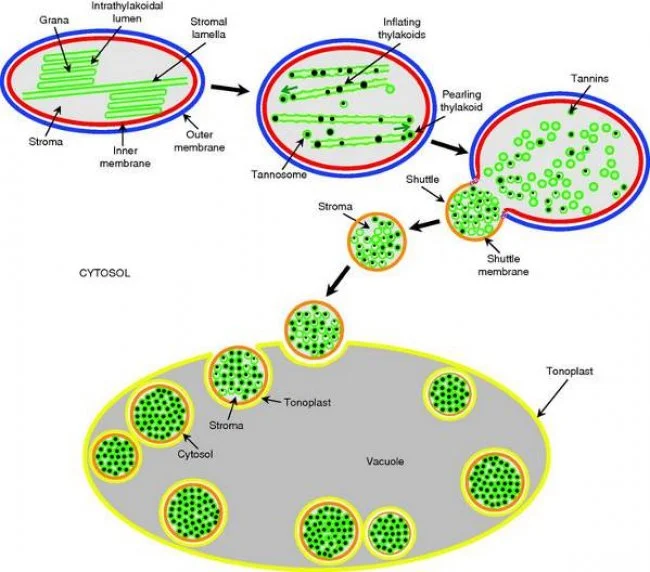
How tannins are created
Scientists discover how the delicious tannins in our wines are created.
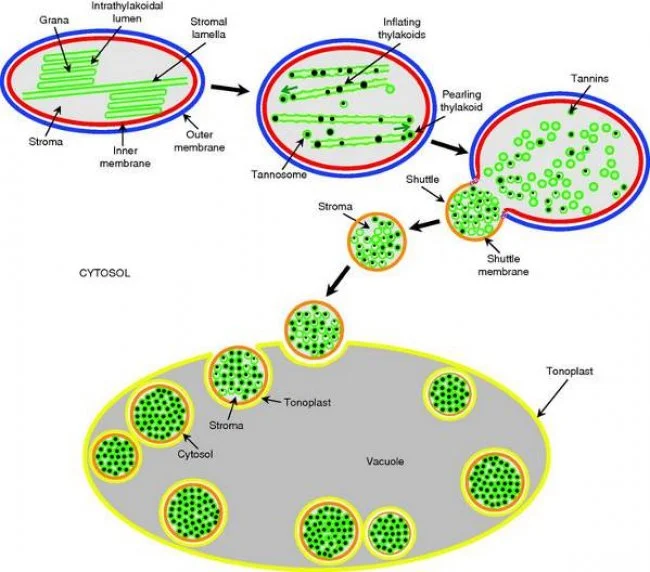
We all know the tannin flavour found most prominently in our favourite glass of red. While they have featured in wine for many years, only recently have scientists discovered how the tannins themselves are made in plant cells.