

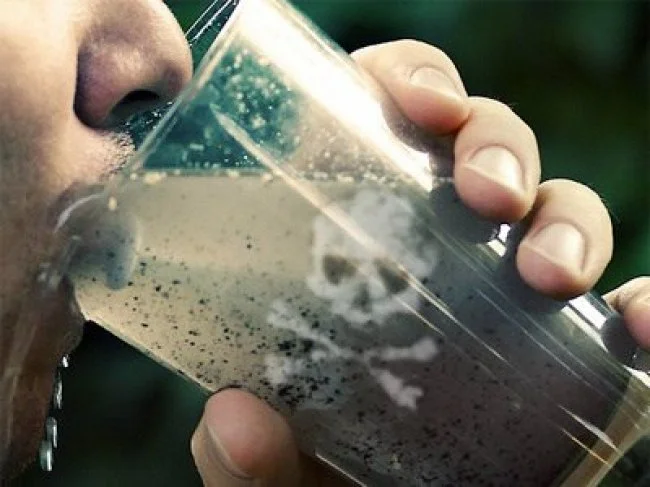
Good hygiene depends on high quality water.
A final rinse after cleaning and sanitising with low-quality water that contains bacteria, or is too hard for chemical to be effective could be putting your wine at risk when it doesn’t have to be. By using high quality water in your winery operations, you can minimise contamination risk, without significant financial expenditure. There are two principal considerations to take into account to assess water quality - water hardness and potability.
A final rinse after cleaning and sanitising with low-quality water that contains bacteria, or is too hard for chemical to be effective could be putting your wine at risk when it doesn’t have to be. By using high quality water in your winery operations, you can minimise contamination risk, without significant financial expenditure. There are two principal considerations to take into account to assess water quality - water hardness and potability.
As wine is a potable good, it is common sense to make sure that the water used in a winery is to a potable standard. If you are using rain water - it is important to make sure that there is no bacteria, yeast of microbes that are persisting in your tanks as this may impact your final rinse and your overall hygiene standards. You can treat your rainwater with filters which can dramatically improve water quality. High quality filtered water is essential for bottling lines and is useful to protect finished wines. Bore water should be treated with similar filtration methods so that you can maintain the highest possible hygiene standards in the winery.
Water hardness is a measure of the mineral content in water (hard water having a high mineral content). When water hardness is being quoted, the value being talked about is the ‘total permanent hardness’ of water, which is the amount of Calcium and Magnesium sulphates in water, but is expressed as an equivalent of Calcium Carbonate (CaCO3).
Let’s look at a practical example, say the Barossa Water System in South Australia. The total permanent water hardness in this system sits at 148 mg/L of CaCO3. According to the United States Geological Survey, this puts the water in the Barossa in the ‘Hard’ classification (between 121 and 180 mg/L is classified as ‘Hard’). While water hardness is not detrimental to health, it is definitely a negative in an industrial setting.
Firstly, the hard water is more corrosive, especially in galvanic corrosion. So using hard water decreases the useable life of your stainless components. Don’t forget that hard water also deposits scale on metals, which can clog up your pipes too. More importantly, hard water also reduces the effectiveness of your cleaning and sanitising chemicals.
Hard water has many free 2+ ions that combine with metal salts in hygiene chemicals to form soap scum. Essentially the minerals in the water reduce the surfactant properties of your cleaning and sanitising agents. This in turn reduces the rinsing properties of your solution. The surfactants role in cleaning agents is to keep surface tension in solution high, which keeps insoluble molecules suspended in solution so they can be washed away. If the reduction in surfactant properties is high enough, you will be left with deposits on your tank walls which will require further work (costing you time and money).
To combat hard water more chemical may be required. The use of additional chemical should be carefully considered, as there will be a flow on impact to your effluent. If water hardness is impacting the cleaning efficacy of your chemical to an extent where deposits are being left on your surfaces, it would be detrimental to simply leave the deposits on your stainless surfaces, as this would provide an excellent breeding ground for microbes such as Brettanomyces.
Most good industrial cleaning products should contain ingredients to counteract the effects of hard water, however if you live in a particularly ‘hard’ water area, such as our friends in the Barossa, then water softening could be a worthwhile investment. Water softening does come at a risk of higher Sodium or Potassium deposits in your soil, as they are the two main salts used to soften water (in ion transfer softening). However you want to treat hard water, it is worthwhile knowing what your water hardness level is, and then carefully consider the impact of treatment or additional chemical on your effluent.
By using potable water, and being aware of the hardness level of your water, you offer your cleaning chemicals the best opportunity to effectively clean your surfaces. As the saying goes, rubbish in equals rubbish out. So don’t start with rubbish water quality, otherwise you’ll get rubbish wine out.
References
Aquasafe systems (2005) Quality of Mains Water Assessed Against Water Quality Criteria, http://www.aquasafecanada.com/quality-of-mains-water-assessed-against-water-quality-criteria/, Accessed 2013-12-06
Wikipedia (2013) Hard Water, http://en.wikipedia.org/wiki/Hard_water, Accessed 2013-12-06
Wine opinion: why some aromas are better left out of the bouquet
"Unscrupulous winemakers still don't clean their equipment properly, and use bad fruit. So, as the saying goes, 'rubbish in, rubbish out.' But this wine still has to be sold."

"Unscrupulous winemakers still don't clean their equipment properly, and use bad fruit. So, as the saying goes, 'rubbish in, rubbish out.' But this wine still has to be sold."
You can read the whole article here. The point we like to take out of this is that while some bacteria and microbes are beneficial to your wine, others are not. We know, it's not revolutionary stuff, but the point of cleaning and hygiene is to control for the bad stuff, whilst still maintaining the good stuff.
Advancing the frontline against Brett
In the fight against Brett, winemakers need to have access to the best technology possible. For many years now, the Australian Wine Research Institute (AWRI) has been developing cutting edge technology, and engaging in 'on the ground' communications work to bring this technology to Australian producers.

In the fight against Brett, winemakers need to have access to the best technology possible. For many years now, the Australian Wine Research Institute (AWRI) has been developing cutting edge technology, and engaging in 'on the ground' communications work to bring this technology to Australian producers.
Recent advances in genome sequencing techniques has allowed the AWRI to take a closer look at Brett and to determine what causes it's sulphur resistance, and what can be done about it in a targeted manner. Check out the article"Advancing the frontline against Brett" - it's well worth a read.
For our two cents, at this current stage, your best bet to help control Brett growth is to have a thorough hygiene regime in place. This will always be the case, not only for the fight against Brett, but also against all unwanted microbes in your wine.
The scourge of Brettanomyces and the need for sanitising.
Over the past few years Brettanomyces or Dekkera (Brett for short) have been spreading rapidly throughout wineries in Australia causing much unwanted wine taint, specifically in the form of volatile phenols or ‘sweaty leather’. Brett yeasts are a natural component of the winemaking process, which makes it almost impossible to eliminate completely and unsurprisingly they find themselves in winery air, on cellar walls, drains, pumps, transfer lines and other pieces of equipment.

Over the past few years Brettanomyces or Dekkera (Brett for short) have been spreading rapidly throughout wineries in Australia causing much unwanted wine taint, specifically in the form of volatile phenols or ‘sweaty leather’. Brett yeasts are a natural component of the winemaking process, which makes it almost impossible to eliminate completely and unsurprisingly they find themselves in winery air, on cellar walls, drains, pumps, transfer lines and other pieces of equipment. The two most important stages for Brett contamination in winemaking occur during malolatic fermentation and ageing in used barrels. Brett’s slow growing characteristics are best suited to the conditions created after alcoholic fermentation is completed and where the surfaces are not cleaned and sanitised correctly, leaving residual sugars and allowing Brett to proliferate.
The real issue here is how to combat Brett proliferation in your winery. A report in the South African Journal of Enology and Viticulture outline the five key areas for the spread of Brett, which are;
- Recent trends in some winemaking styles - such as wines with higher pH values and residual sugar;
- Trends in winemaking practices - decreased use of filtration and SO2;
- General poor cellar hygiene along with improper cleaning and sanitisation of barrels - a critical source of Brettcontamination of wine;
- The spread of Brett between wineries and regions due to the use of contaminated barrels which are traded in the second hand barrel market; and
- Importation of Brett contaminated wine from other affected wineries.
The first two points are winemaking practices, and as we are hygiene specialists not winemakers, we’ll leave those decisions up to the experts and enjoy the end result! The last two points are about good winery management. That is making sure you know what you are putting into your cellar and where you are getting your produce from, that’s just good practice. Knowing when Brett infected products or wine is in your winery will enable to you to take steps to manage their spread, and limit any damage that may occur. There are many different ways to manage Brett in your wines once they are there, some of which are outlined in this Wine Monthly article, but we believe that prevention is better than a cure and that brings us to point 3 - poor hygiene. As dull as it may sound, it’s serious business and it can cost you dearly if you don’t take it seriously.
Research into Brett has shown that it is able to form significant biofilms on what appear to be clean surfaces, and these biofilms are a major source of Brett propagation throughout a winery. The formation and adherence of Brett has been shown to increase with increasing pH of wine, and sulphur dioxide is known to slow down the rate of Brett growth in solution (which is why it is so commonly used in modern winemaking). A good summary of biofilms and effect of cleaning and sanitising can be found here. However these are merely control solutions after infestation, rather than a method to eliminate harmful microbes from your wines. Another source of Brett contamination is in oak barrels. A 2013 study by Guzzon, Nardin, Micheletti, Nicolini and Larcher outlined the use of ozone as ‘a highly effective sanitising agent without interfering with the profile of the phenolic substances extracted from oak’.
When we talk about hygiene, what we are really talking about is your hygiene procedure, which includes all aspects from cleaning, sanitation and scheduling. It’s important to have a thorough hygiene procedure in your winery to limit the spread of all microorganisms, not just Brett. Cleaning is a very important part of any winemaking process, however a clean surface is deceptive as it can still harbour microorganisms such as Brett that can taint your wine if left unattended. This is where sanitisation is most important and is something that needs to be addressed in a serious and systematic way so that you can ensure the quality of your wine. Think of sanitation like insurance for your wine. If you do it properly, then you can be safe knowing that there won’t be any hidden surprises along the way to achieving your final product. Just remember, sanitation alone will not cure a Brett infestation, as sanitation will not destroy the biofilms that Brettutilises to grow, but using the right cleaning agent, followed by correct sanitation will provide you with the best possible counter-attack to Brett infestations. The last and probably most important step is to develop a hygiene procedure within your winery, and then stick to it. If you take hygiene seriously, then you shouldn’t have to spend much time worrying about the scourge of Brett in your winery, which means you can spend more time making great wine!
References
Oelofse, A, Pretorius, IS & du Toit, M 2008, ‘Significance of Brettanomyces and Dekkera during Winemaking: A Synoptic Review’, South African Journal of Enology and Viticulture, vol. 29, no. 2, pp. 128-144
Barata, A, Laureano, P, D’Antuono, ID, Martorell, P, Stender, H, Malfeito-Ferreira, M, Querol, A & Loureiro, V 2013 ‘Enumeration and Identification of 4-Ethylphenol Producing Yeasts Recovered from the Wood of Wine Ageing Barriques after Different Sanitation Treatments’, Journal of Food Research, vol. 2, no. 1, pp. 140-149
Patterson, T 2012, There’s No Subsitute for SO2 (Yet), Wines and Vines, http://www.winesandvines.com/template.cfm?section=columns_article&content=103719&columns_id=24
Joseph, L, Kumar, G, Su, E & Bisson, L 2007 ‘Adhesion and Biofilm Production by Wine Isolates of Brettanomycesbruxellensis’, American Journal of Enology and Viticulture, September 2007, vol. 58, no. 3, pp. 373-378
Guzzon, R, Nardin, T, Micheletti, O, Nicolini, G, & Larcher, R 2013 ‘Antimicrobial activity of ozone. Effectiveness against the main wine spoilage microorganisms and evaluation of impact on simple phenols in wine’, Australian Journal of Grape and Wine Research, June 2013, vol. 19, no. 2, pp. 180-188